Meru National Park sits 350 km from Nairobi, a 6-hour drive or 1-hour flight. Here's how to get there, what it costs, and when to go in 2026.
Meru National Park from Nairobi sits 350 km to the northeast, and the drive takes roughly 6 hours on tarmac and gravel roads. That distance makes it a genuine adventure park, not a quick day trip. Meru National Park is famous as the setting for Joy and Elsa Adamson's lion story, and its Tana River frontage and rhino sanctuary make the long drive worthwhile. In 2026, more Nairobi travellers are choosing Meru over crowded parks for a wilder, quieter safari.
Why visit Meru National Park in 2026?
Meru National Park rewards travellers who want fewer vehicles and more wildlife per sighting. The park's rhino sanctuary protects both black and white rhino, and elephant, lion, and buffalo numbers have recovered strongly since the 1980s poaching crisis. 2026 travellers benefit from upgraded park roads and clearer KWS fee tiers that make budgeting easier. Because Meru sees fewer visitors than the Maasai Mara or Amboseli, game drives here feel personal and unhurried.
How far is Meru National Park from Nairobi?
Meru National Park is 350 km from Nairobi, or about 220 miles, measured to Murera Gate. The Kenya Wildlife Service confirms this figure, and it matches distances quoted by most Kenyan safari sources. By comparison, the drive to Meru National Park is roughly the same distance as Nairobi to Malindi, though the road profile is very different, with hills, forest edges, and small towns along the way instead of a straight coastal highway.
The drive from Nairobi to Meru National Park takes about 6 hours in a private vehicle, excluding stops. Most self-drive travellers route through Nyeri and Nanyuki, climbing past Mount Kenya's western slopes before dropping into the drier Meru lowlands. Traffic leaving Nairobi through Thika adds 30 to 60 minutes during weekday rush hour. We recommend leaving Nairobi by 7 a.m. to reach the park gate with enough daylight left for an afternoon game drive.
What does a Meru National Park safari cost?
A short Meru National Park package typically costs USD 200 to USD 300 per person, covering park entry, transport, and basic accommodation. Longer, fuller-board camping safaris average USD 150 to USD 250 per person per day. Costs rise with private vehicles, premium tented camps, and flying transfers. Our planners at Proven Adventures build packages around these ranges, adjusting for group size, season, and how many nights you spend inside the park versus travelling to it.
Non-resident adults pay USD 70 per person per day to enter Meru National Park, under the Kenya Wildlife Service's 2026 four-tier tariff. Kenyan citizens and East African residents pay a separate, lower KES gate rate on presentation of a national ID or passport. Children pay reduced fees in every visitor category. These entry fees apply on top of transport and accommodation costs, so budget for them separately when planning a Meru National Park from Nairobi trip.
How do you get to Meru National Park from Nairobi?
You can reach Meru National Park from Nairobi by road, air, or a combination of matatu and private transfer. Self-driving takes about 6 hours and gives you full control of stops. Flying from Wilson Airport takes about 1 hour to the Kinna or Mulika airstrips near the park. Public transport alone will not get you inside the park, since Meru National Park has no scheduled bus or matatu service through its gates.
The standard driving route to Meru National Park runs through Thika, Nyeri, and Nanyuki before turning east towards Meru town and Murera Gate. Road surfaces are tarmac for most of the journey, with the final stretch near the park gate on gravel. A 4x4 is not compulsory but helps during the long rains in April and May. Fuel up in Nanyuki, since fuel stations thin out closer to the park.
Matatus run frequently from Nairobi to Meru town, a journey of about 4 to 5 hours along a busy, well-tarmacked route. From Meru town, you still need a private vehicle or a booked transfer to cover the final distance to Murera Gate, since public transport does not enter the park. Budget travellers often combine a matatu to Meru town with a pre-arranged park vehicle, which Proven Adventures can organise as part of a package.
When is the best time to visit Meru National Park?
The best months to visit Meru National Park are June to October, during Kenya's long dry season. Grass is shorter, water sources shrink, and animals gather near the Tana and Rojewero rivers, making sightings easier. January and February offer a shorter dry window with good visibility. November and December bring green scenery and strong birdwatching, but muddier roads. Avoid mid-March to May if you want to limit the risk of impassable tracks during the long rains.
Where should you stay near Meru National Park?
Most Meru National Park visitors stay inside or just outside the park at tented camps and lodges overlooking the rivers or plains. Options range from luxury camps with private verandas to simple self-catering bandas run by Kenya Wildlife Service. Staying inside the park cuts down on early-morning drive time to game-viewing areas. Our Proven Adventures itineraries typically place guests at camps near the rhino sanctuary, giving the best odds of a rhino sighting on the first game drive.
Budget travellers can also camp at public campsites within Meru National Park for a lower nightly cost than a lodge stay. These sites have basic facilities, so travellers bring their own tents, food, and water. Camping suits self-drive groups and overland safaris more than first-time visitors travelling alone. For a comfortable first Meru trip, we generally recommend a mid-range tented camp over public camping, since it includes meals, guiding, and secured grounds.
What can you do in Meru National Park?
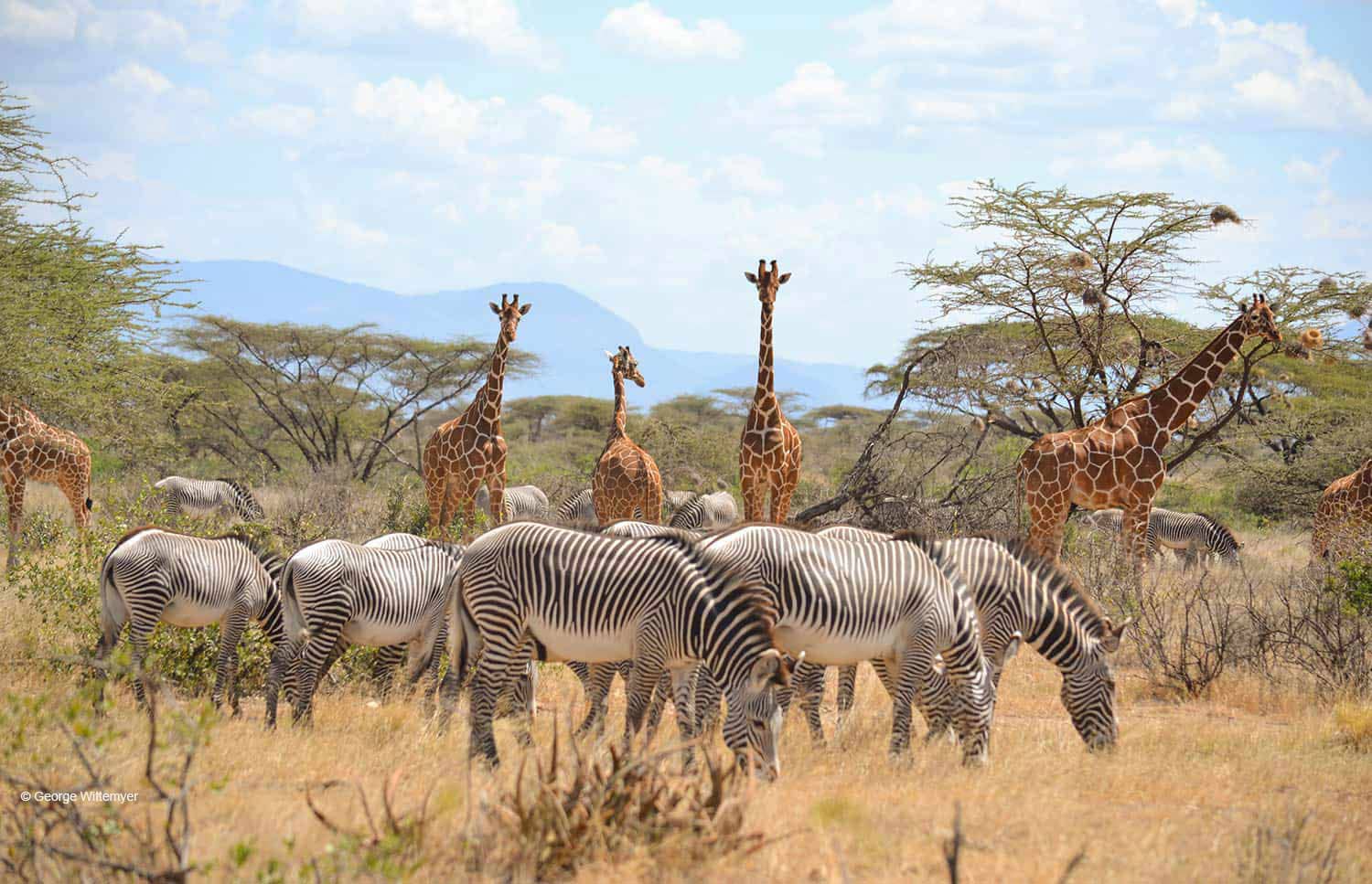
Meru National Park's top activity is game viewing in its rhino sanctuary, home to both black and white rhino under armed KWS protection. Game drives also turn up elephant, buffalo, lion, cheetah, and reticulated giraffe across open plains and riverine forest. Boat rides on the Tana River are available at some camps, offering a different angle on hippo and crocodile. Guided walks near camp let visitors see smaller wildlife and birdlife up close, with a ranger for safety.
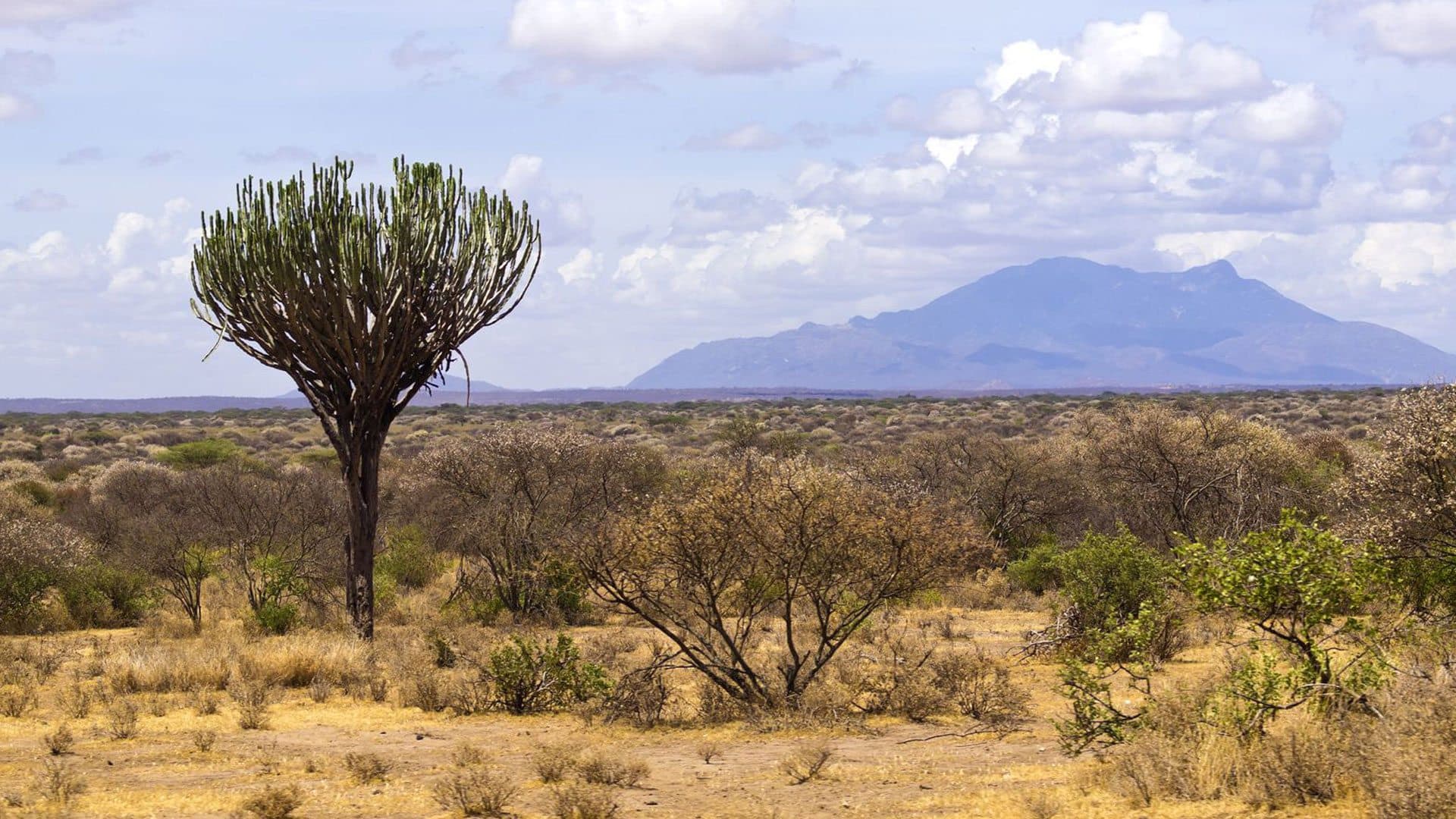
History lovers can visit Elsa the lioness's grave inside Meru National Park, the resting place tied to Joy Adamson's Born Free story. The site sits near the park's northern section and forms a short, easy stop between game drives. Meru's landscape of doum palms, acacia woodland, and 13 rivers also gives it a more varied look than the open grass plains of Kenya's better-known parks, which suits photographers looking for something different.
Is Meru National Park good for a weekend trip from Nairobi?
A weekend trip to Meru National Park from Nairobi is possible but tight, since the 6-hour drive each way leaves only one full day inside the park. Flying cuts travel time to about 1 hour each way, making a 2-night weekend far more relaxed. Travellers with only a Saturday and Sunday free should consider flying in and driving out, or extending to a 3-night stay to justify the distance from Nairobi.
What should you pack for a Meru National Park trip?
Pack neutral-coloured clothing, a light rain jacket, and closed shoes for Meru National Park, since game drives cross both dry plains and riverine forest. Bring sunscreen, a hat, and insect repellent, as the lower altitude here is warmer than Nairobi. Carry cash in small KES notes for tips and incidentals, since card facilities are limited inside the park. A camera with zoom, binoculars, and a power bank round out a practical Meru packing list.
What is a sample 3-day Meru National Park itinerary from Nairobi?
Day one covers the 6-hour drive from Nairobi to Meru National Park, arriving in time for an afternoon game drive near the rhino sanctuary. Day two is a full day inside the park, with morning and evening game drives split by a midday rest at camp. Day three includes an early game drive, a stop at Elsa's grave, and the drive back to Nairobi, arriving by early evening. Flying shortens this itinerary by a full day of driving.
How do you book a Meru National Park safari?
Book a Meru National Park safari by confirming your dates, group size, and preferred camp before locking in transport, since June to October fills up fastest. Our Proven Adventures planners handle park fee payments through KWSpay, arrange the drive or flight from Nairobi, and match you to a camp near the rhino sanctuary based on your budget. Send us your travel month and party size, and we will build a tailored Meru National Park from Nairobi itinerary with clear, upfront pricing.